2026 Confluence Award Research Showcase
The Confluence Award Research Showcase elevates and recognizes WashU faculty members and their community partners for their innovative and impactful research and for their deep engagement with the region.
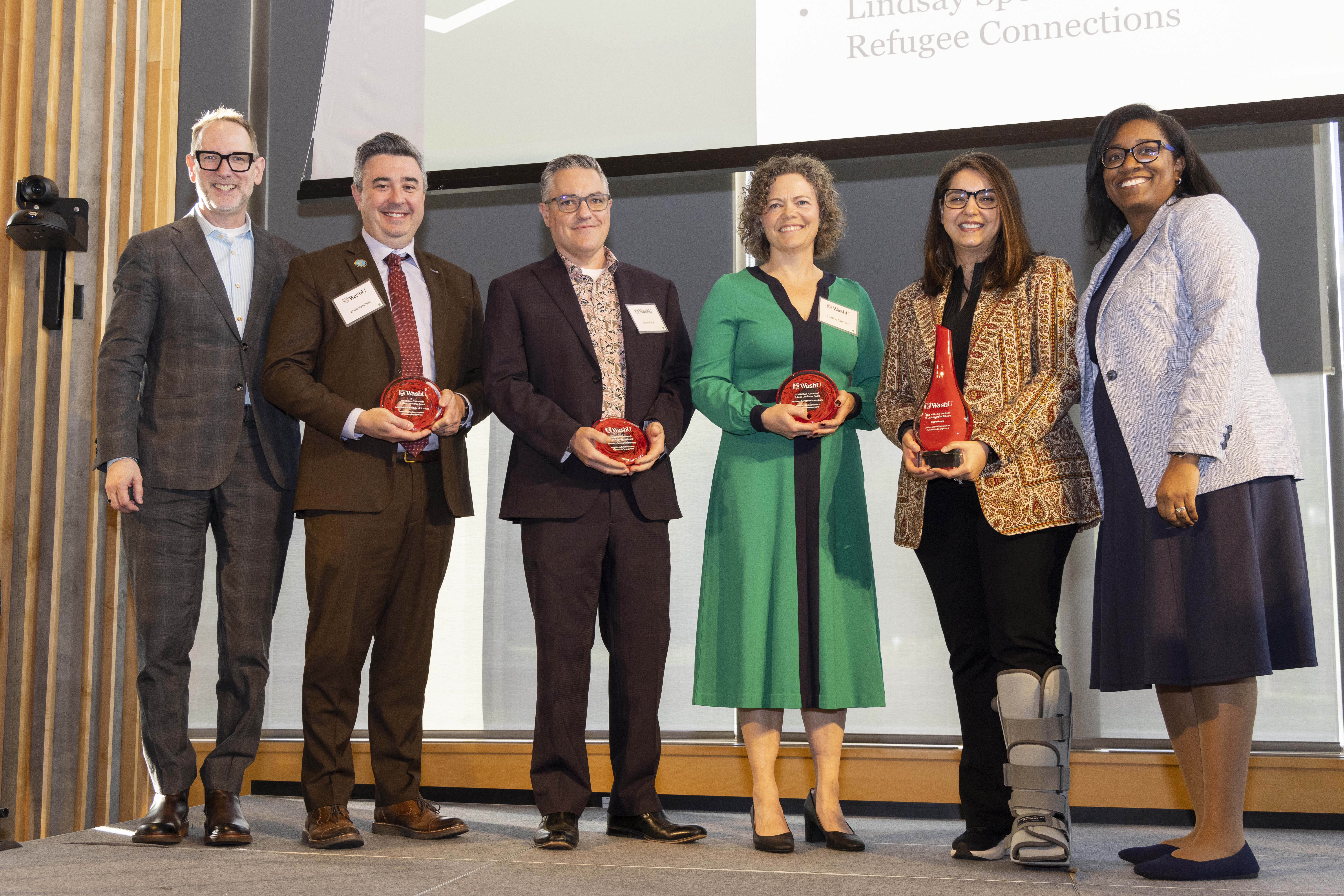
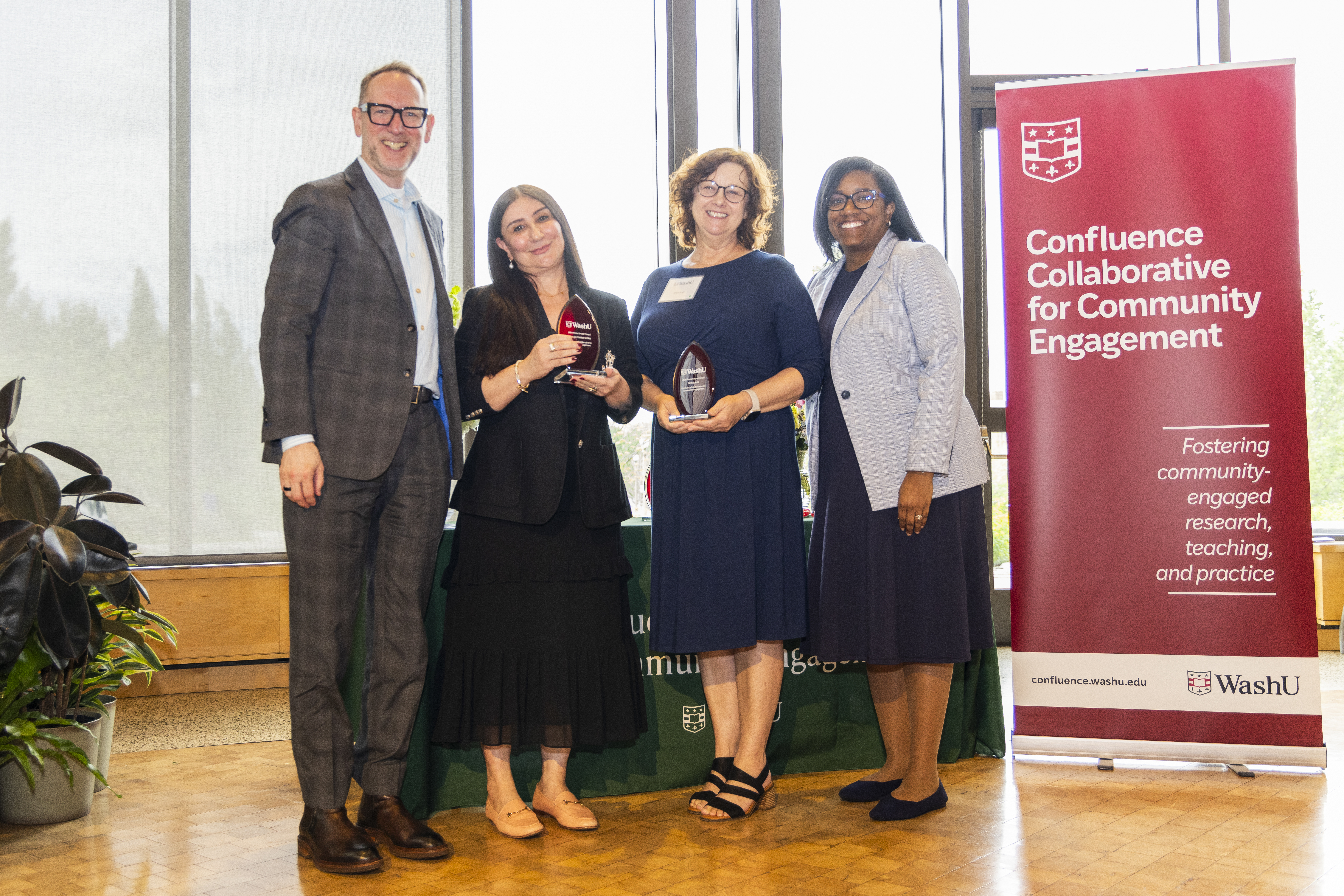
William H. Danforth St. Louis Confluence Award
“Fostering New Americans’ Belonging and Integration in St. Louis”
The project focuses on resettled refugees as New Americans in St. Louis, MO, a city currently ranked as the third fastest-growing metropolitan area in the U.S. in terms of foreign-born population growth. Using a mixed-methods and community-informed approach, the project defined and measured integration multidimensionally, explored structural barriers in integration, and is now transitioning toward the co-design of community-led solutions to improve service access. Preliminary findings reveal alarmingly high rates of poverty, particularly in the areas of living standards, health, and education.
Faculty Lead: Mitra Naseh, assistant professor, Brown School
Community Partners: Blake Hamilton, president and CEO, the International Institute of St. Louis; Jason Baker, executive director, Monarch Immigrant Services in St. Louis; Haroon Safi, president of the U.S. Afghan Chamber of Commerce in St. Louis; Fatema Medhat, Missouri State Refugee Health coordinator, U.S. Committee for Refugees and Immigrants; Aya Kawasaki, interim co-convener, Immigrant Service Providers Network; Lindsay Spencer, program manager, Archway Refugee Connections; Ann Wittman, director, Welcome Neighbor STL; Kara Gebre, program director, Refugee and Immigrant Services & Education; Lina Oleik, training and enrichment manager, Jewish Vocational Service of Kansas City
Provost Impact Award for Early Career Community-Engaged Research
Two hospitals in rural southeastern Missouri recently closed, and in December 2025 a third hospital ended obstetric services. With two additional birthing hospitals at risk of closure in the next 2–3 years, the region has quietly transformed into one of the largest maternity care “deserts” in the Mid-South. This project develops community-supported solutions to the rural maternity crisis by engaging the families and communities most affected by the loss of local maternity care. Using a modified Delphi process, including interviews with local clinicians and maternal and community health advocates from across the region, our study explores what new models of maternity care emerge to fill in the gaps left by maternity unit closures.
Faculty Lead: Victoria Brown, postdoctoral research fellow, WashU Medicine
Community Partners: Bootheel Perinatal Network, Building Blocks, Missouri Bootheel Regional Consortium, MPower – Mississippi County Health Department, ParentLink, It Takes a Village
Provost Impact Award
This study evaluates Operation Food Search’s Nourishing Healthy Starts, a Food is Medicine intervention designed to address food insecurity and improve maternal mental health, pregnancy, and infant outcomes in St. Louis, Missouri. A pilot demonstrated significant improvements in maternal well-being and birth outcomes. The full study includes over 200 participants. Co-designed and co-led by university and community partners at WashU and Operation Food Search and guided by a Participant Advisory Committee, the project aims to advance health equity, sustainability, and community-engaged research.
Faculty Lead: Dan Ferris, associate professor of practice, Brown School
Community Lead: Kristen Wild, president and CEO, Operation Food Search
PACT-STL was a five-year community–university partnership between Vision for Children at Risk and Washington University that centered caregiver voice in transforming St. Louis’s child- and family-serving systems. Using participatory, mixed-method evaluation, families and providers co-designed and assessed interventions to strengthen protective factors, enhance collaboration, and reduce child-welfare referrals. Results showed improved family well-being, greater trust, and sustained parent leadership beyond the grant.
Faculty Lead: Patricia Kohl, professor, Brown School
Community Lead: Sanaria Sulaiman, president and CEO, Vision for Children at Risk
In 2017, Superintendent Bartley launched a district-wide strategic plan to address racial and socioeconomic opportunity gaps for Black students through a commitment to racial equity and wellbeing. The plan included professional development on racial bias and district-wide assessments of student, parent, and staff wellbeing. This mixed-methods study evaluates the plan’s impact by: (1) examining how teachers implement anti-racist, joy-centered pedagogy; (2) exploring how Black children experience joy in classrooms; and (3) assessing how joy and wellbeing can serve as measures of racial equity.
Faculty Lead: Seanna Leath, associate professor, Psychological & Brain Sciences, Arts & Sciences
Community Lead: Sharonica L. Hardin-Bartley, superintendent, School District of University City
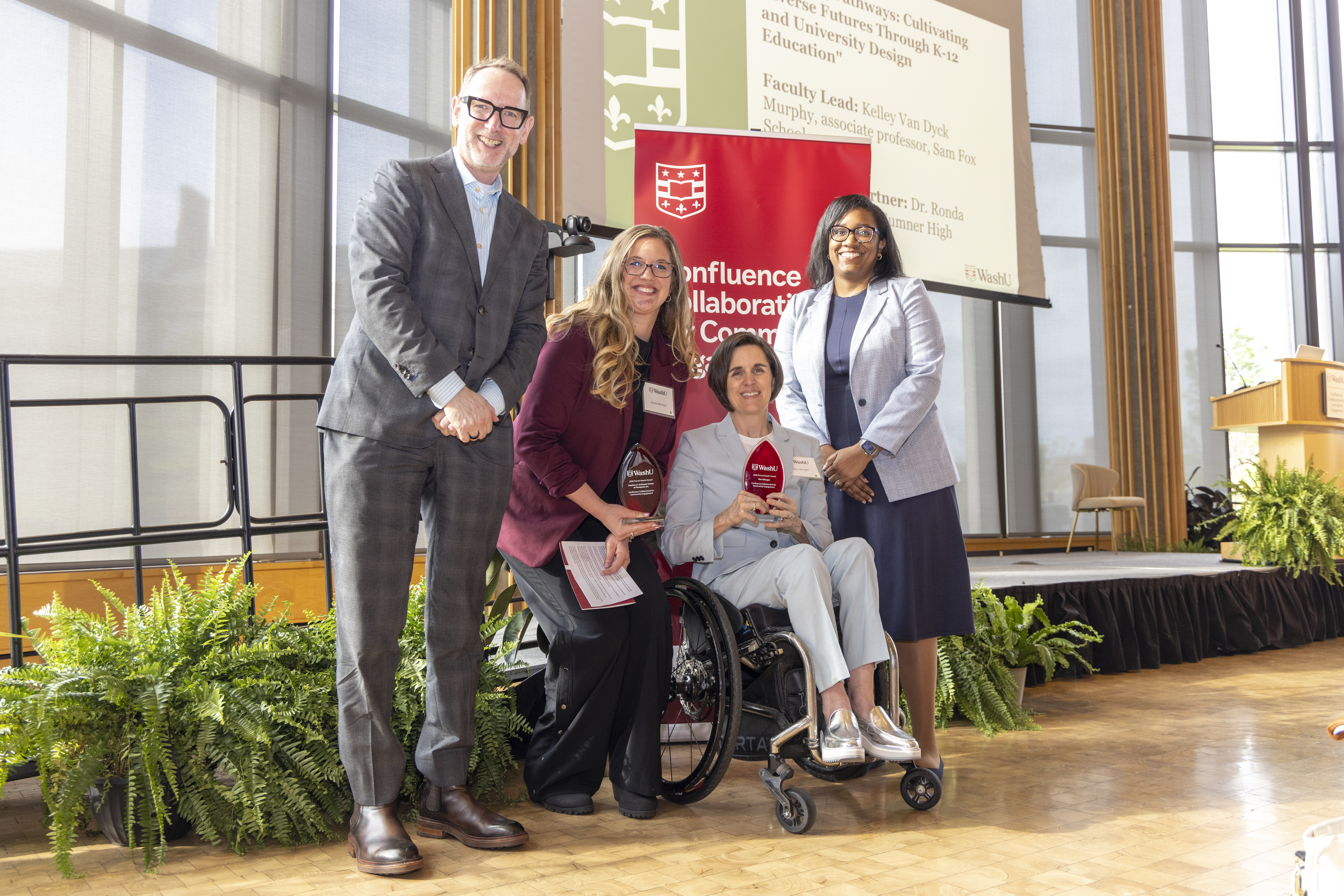
This project examines the impact of tailored, intensity-controlled physical activity training (IPAT) on cardiometabolic health in wheelchair users (WU), who face elevated risks for obesity and related conditions. In a community-based randomized trial, we assess cardiorespiratory fitness, vascular function, body composition, and physical activity (PA). Preliminary results show improved VO₂peak and sustained PA. The project is a collaboration with a community partner and a Community Advisory Board. Findings will inform PA guidelines and support community-based health promotion for WU.
Faculty Lead: Kerri Morgan, associate professor, WashU Medicine
Community Lead: Annie Morrow, chief program officer, Paraquad
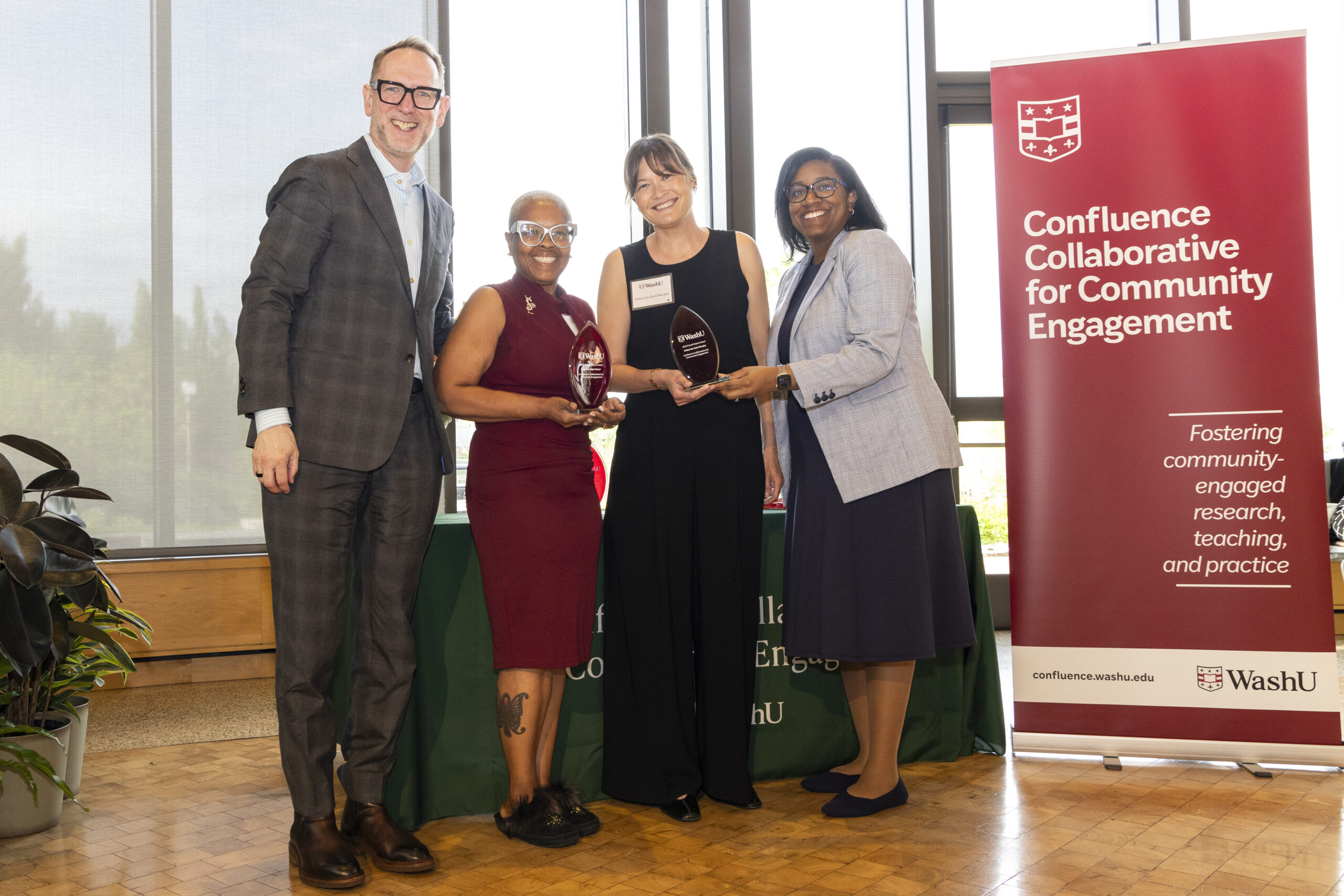
Building diverse futures requires educational pathways spanning elementary school through university-level education. The Alberti Program introduces architecture and design thinking to elementary and middle school students, making design accessible to historically excluded communities. Pathways is a course in which WashU students work through design-build projects engaging 50+ students at Sumner High School as community experts. Together, these programs build connected educational pathways across three populations: elementary students engaging design thinking for the first time, high schoolers as experts and co-designers reshaping their own spaces, and university students developing collaborative practice.
Faculty Lead: Kelley Van Dyck Murphy, associate professor, Sam Fox School
Community Lead: Dr. Ronda Wallace, principal, Sumner High School
Special Recognition for Collaborative Research
Low-barrier services are needed to provide respite and linkages to healthcare for the homeless. This community based participatory research project conducted with Comprehensive Behavioral Health Center in East St. Louis evaluated the utility and effectiveness of their Drop-In Center. Through mixed methods surveying staff and clients and evaluating client health records, we illustrated how the Drop-In Center improves mental health and social service access among the unhoused. Findings will enhance Drop-in Center procedures and support evidence-based advocacy and expansion of this respite model.
Faculty Lead: Devin Banks, assistant professor, WashU Medicine
Community Lead: Joseph Harper, executive director, Comprehensive Behavioral Health Center
Over the past two decades, Washington University, in conjunction with state and local stakeholders have developed and sustained a productive and efficient multiple-source surveillance system for autism spectrum disorder (ASD) and other developmental disabilities (DD) in the metropolitan St. Louis area as part of the Centers for Disease Control and Prevention’s Autism and Developmental Disabilities Monitoring (ADDM) Network.
Faculty Lead: Robert Fitzgerald, associate professor, WashU Medicine
Community Lead: Special School District of St. Louis County & John F. Mantovani, MD
In 2019, the Interdisciplinary Environmental Clinic published “Environmental Racism in St. Louis,” which combined quantitative data analyses and personal impact stories to highlight the disproportionate harms Black and low-income St. Louisans suffer across several measures of health and well-being. The IEC’s Environmental Justice project has developing recommendations for addressing these inequities. In December 2025, IEC will publish a follow-up report, based on this work, containing an expanded assessment of the same metrics and recommendations to address these environmental harms.
Faculty Lead: Elizabeth Hubertz, professor of practice, School of Law
Community Leads: DeMarco Davidson, executive director, Metropolitan Congregations United; Kristian Blackmon, executive director, Tenants Transforming Greater St. Louis; Gretchen Waddell Barwick, director, Sierra Club Missouri Chapter
In partnership with LaunchCode staff and students, we co-created a research agenda focused on increasing equity and social mobility in St. Louis. Through a co-generated survey, novel data integrations with large-scale social mobility data, and in-depth interviews with participants, we explored how more equity-focused policies can improve entrance and persistence for women and Black and Latinx students. These efforts ultimately aim to increase earnings, life satisfaction, and optimism, while reducing the spatial mismatch between urban residents and high-paying employers in St. Louis City. In partnership with CERP3 has expanded to solve different parts of these pipelines through AI literacy work, middle school STEM education, and AI-focused reskilling.
Faculty Lead: Jason Jabbari, assistant professor, Brown School
Community Leads: Haley Shoaf, UnlockedLabs; Julian Nicks, City of St. Louis; Kevin Kickham, LaunchCode
Mobile (m)Health interventions need to be designed for and with the St. Louis Black community. The project adapted and tested a mHealth app for substance use, “uMAT-R,” among this community. Clients, peer health workers, and providers (N=44) described barriers and facilitators to mHealth. After adaptations, outcomes from Black (n=217) and white clients (n=427) suggested that co-creation of solutions with community partners could reduce group differences in intervention engagement. Community organizations directed the project trajectory, increasing mHealth’s impact for equitable recovery.
Faculty Lead: Hannah Szlyk, assistant professor, WashU Medicine
Community Leads: Sarah Earll, executive director, St. Louis Empowerment Center; Christina Lee, peer case manager supervisor, St. Louis Empowerment Center; Dr. Leslie Johnson, pastor, Jubilee Community Church
Maternal mortality in the U.S. has doubled, largely occurring in the postpartum period and driven by cardiovascular disease, yet engagement in postpartum cardiovascular care remains low. In a study of mothers enrolled in Parents as Teachers (PAT), a national home visiting program, we found low rates of postpartum clinic attendance (30%), even amongst high-risk pregnancies, although early and sustained home visiting improved linkage to care. In parallel, evaluation of a two-week postpartum clinic-anchored remote blood pressure monitoring (rBPM) program for women with hypertensive disorders of pregnancy at Barnes over showed high rates of persistent hypertension at the end of the monitoring period and declining engagement after the first week of monitoring. Together, these data indicate that neither clinic-based care nor rBPM alone is sufficient to support sustained postpartum hypertension management, revealing a critical implementation gap. In response, we are co-designing HEART at Home (Home-based Engagement And Remote Treatment for Hypertension) with PAT stakeholders at the national and local level. HEART at Home is a hybrid model of care that integrates telehealth-managed rBPM with home-visiting–based blood pressure support, formalized cardiovascular risk assessment, education on cardiovascular risk reduction, and care navigation to support transition to longitudinal clinical care.
Faculty Lead: Aishwarya Vijay, clinical fellow/cardiologist, WashU Medicine
Community Lead: Allison Kemner, chief research officer and senior vice president, Parents as Teachers