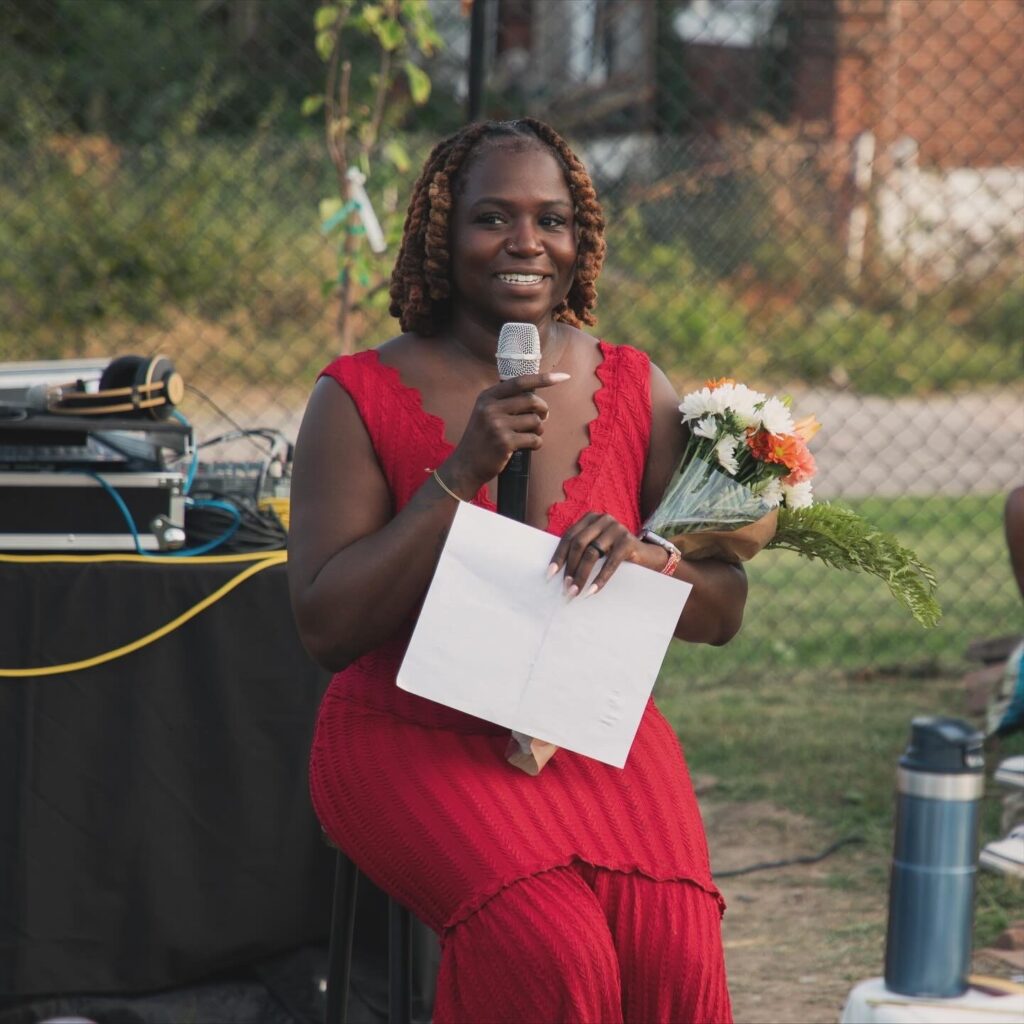
Gabi Cole, a member of the Community Collaborative, is the Co-Founder and Executive Director of Fit & Food Connection, an organization that supports residents of North St. Louis with free healthy groceries, physical exercise, and nutrition education. Cole spoke with the Confluence Collaborative about her work investing in North St. Louis through Fit & Food Connection and through her consultancy firm, Gabi Cole Social Enterprise.
This interview has been edited for length and clarity.
Can you tell us about your journey and how you got to where you are today?
I was born and raised in North St. Louis City. I moved away for college, and when I came back, I saw a lot of discrepancies in my neighborhood that I didn’t necessarily see as a young girl. I started volunteering in the community and realized we didn’t have many volunteer opportunities and resources in my neighborhood, so I created that.
My family, my neighbors, and I would collect food and redistribute it through the larger community, and from there I formed an organization. The fitness piece came a few years in, when I met my co-founder, Joy Millner, a personal trainer and nutrition educator. She was working in North County — Wellston, Pagedale — and I was working in the city, in College Hill, the Ville, places that overlap. We brought it together, and that’s how Fit & Food came about.
We celebrated 10 years last year. Now we’re hyper-focused on what health and well-being mean to the residents of North City. Our garden space is there — we’ve purchased five lots, and we cultivate the land together, ultimately to grow fresh produce. We’re working along St. Louis Avenue with residents and other community groups to get it established as a wellness district, so the things that come to the area are shaping and improving the health and well-being of the people there — including myself, my family, and the families to come.
Can you walk us through Fit & Food Connection’s programming?
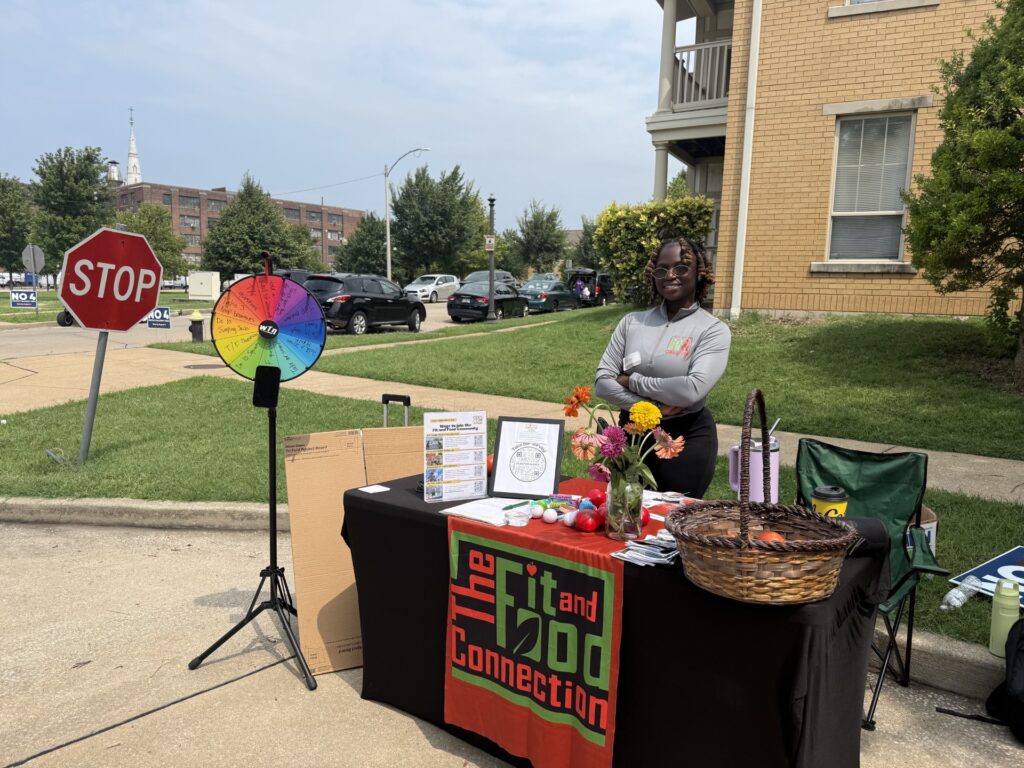
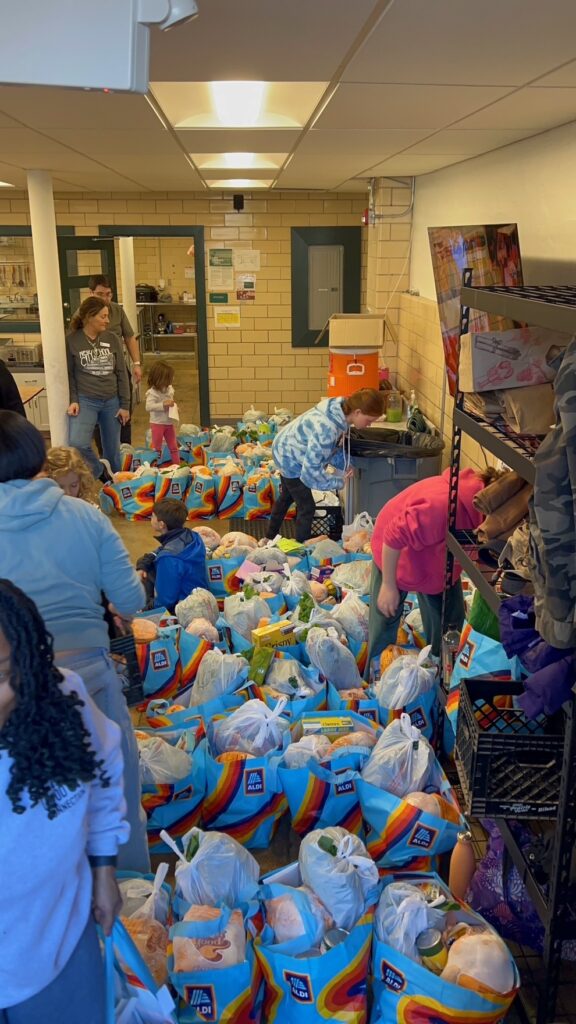
We have two primary programs. Our food access program focuses on our garden production, nutrition, and food distribution. We gather healthy, whole groceries bi-weekly and get them back out in a delivery style — fresh produce, protein, healthy snacks, non-perishables. Our wellness program is everything else: physical exercise and all of our workshops — cooking demonstrations, grocery shopping on a budget, starting a garden at home. We used to get folks wanting one-on-one support, but over the years people want to be more in community, so they come to our workshops in groups.
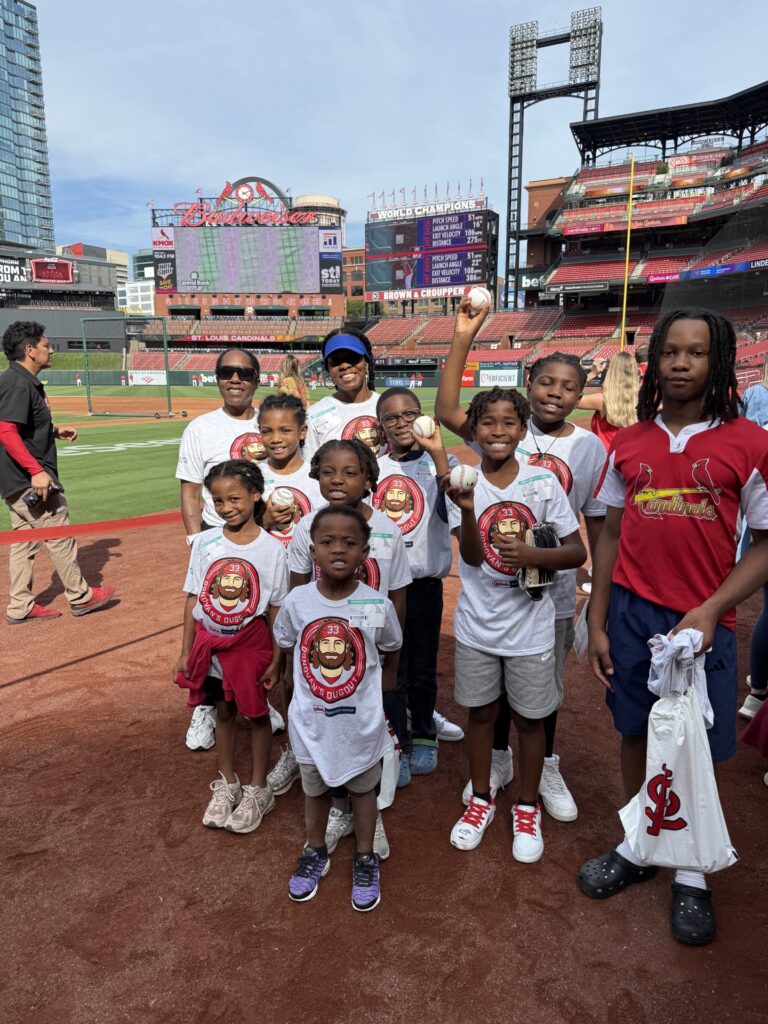
The garden also has a kids’ club. Every summer we bring together young children and older youth around food, movement, the outdoors, and social connectedness — a peer fellowship. They meet weekly to work in the garden and learn new things, with instructors from all over the state coming in. They fish, and they learn about the ecology of the area — the types of bees and bugs and birds they’re seeing in the urban area we live in. It’s another really popular program.
What makes food and exercise so significant, and why are they your focus?
The residents in the areas we serve experience chronic disease — hypertension, diabetes and pre-diabetes, heart disease — at higher rates than almost any other part of the region, maybe even the state. And those issues are all impacted by physical exercise and the things we consume.
We’ve always approached health and wellness holistically. You can’t just put a food pantry in a neighborhood and give people whatever you have left over. We never believed in that. Since the beginning — we started in 2013 and formalized in 2015 — we’ve made a point to provide quality food, the things we would feed our own families.
The nutrition piece came about when the residents asked for it: What do you do with this? What is this called? What are the benefits? So all of our education — budgeting, where to grocery shop for healthy things, even how to order at a fast-food restaurant — went into a program, so people know what they have access to and how to live a healthier lifestyle.
And we hear the feedback: people who are coming off their hypertension medicine, no longer pre-diabetic, sleeping better, starting their own home gardens. We’ve distributed tens of thousands of pounds of produce and educated thousands of people. That’s the impact for us — not just giving out a thousand boxes of food. We have families who graduate from the program: they don’t need food deliveries anymore, or they’re teaching classes and becoming certified. We want to see a community that was once vibrant and established restored to that and be able to sustain that transformation.
What is Gabi Cole Social Enterprise and how does the organization work to “reclaim power over how money flows and who it serves.”
I created Gabi Cole Social Enterprise as a consultancy with a philanthropic arm.
I primarily work with groups at a lower budget — maybe a startup, maybe an organization 10 years in that’s doing really great work — on how to get from point A to point B: building capacity, storytelling, and partnering with others who do similar work.
I use the capital I make from consulting to reinvest back into my community, and I’ve invited others to do the same — hiring consultants to do research, purchasing vacant land to develop, gathering community members to organize.
St. Louis Avenue, where our garden is, is highly vacant — but people still live there.
The residents are asking for more: clean, safe streets, trees, seating, places to gather — all the pieces that go into a healthy, vibrant neighborhood. How can we do that work as the residents? Building institutional relationships takes time, and meanwhile people are sick, people are hungry, people are unhoused. It’s about reclaiming power over how money flows and who it serves — using our own networks to invest back into our own communities, and addressing what’s happening more quickly.
How can people learn more or get involved?
We’re working with residents and other community groups on the St. Louis Avenue Wellness District — if you want to learn more or be a part of that process, reach out. You can reach us by email or check out our website. Our annual fundraiser is coming up on October 10, from 4 to 7 p.m., at our garden space, which has grown so much. If this seems like something you want to be a part of, we welcome you.
——-
Learn more about how to get involved at https://www.fitandfoodconnection.org/about