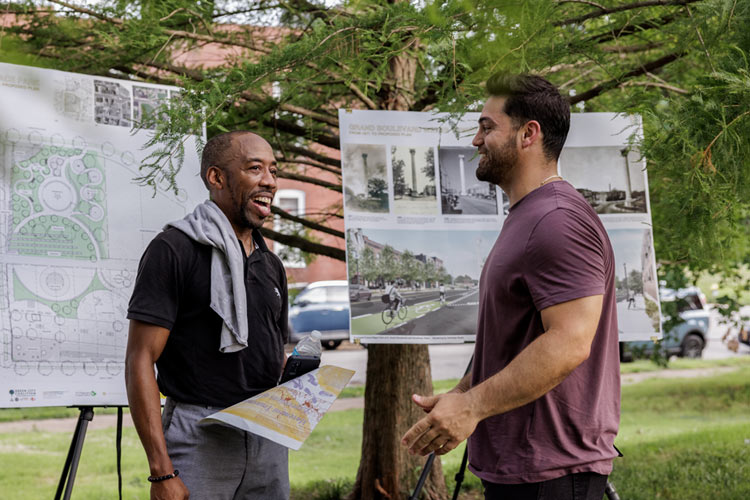
Community-Engaged Education, also known as community-engaged teaching and learning, is an experiential teaching approach that aligns course learning objectives with experiential and applied learning in the community. Engagement with community partners is centered on mutually beneficial outcomes for students and community partners.
Programs offered by the Confluence Collaborative that support community-engaged education and learning include:
- Integration of the community engaged learning (CEL) experience within your curriculum and learning objectives.
- Demonstrable mutually beneficial community-academic partnerships.
- Clear Goals for students and partners that are reflective of course goals & community needs and include students’ critical reflection for meaning.
- Civic Engagement and developing skills in social responsibility in the context of the course.
- Assessment and Outcomes evaluation of learning, behaviors, and impact that are integrated into course design, activities, and artifacts.
- Claiming to provide innovative education and experiential learning outcomes requires that we move beyond positive student and community parter experiences.
- Support to identify validated instruments and methods of evaluating outcome behaviors, changes in applied understanding, awareness of meaning and future application by students, and improvements and impact for the community partners. Identification of appropriate tools is developed in consultation with course faculty and staff in context that is best for the course.
- Discussion and conceptualization of CEL within a current or new course in development.
- Review, feedback, and resources to strengthen learning objectives for behavioral and demonstrable outcomes.
- Coaching on alignment or integration of school or professional competencies into objectives and activities.
- Feedback and resources to support the design of course activities, assignments, and artifacts that can be utilized as outcome assessments
- Tools and resources to develop or strengthen critical reflection and rubric-based assessment of student development of meaning from the experience.
- Provide coaching on the development of scholarly activity around educational outcomes and impact that can be disseminated and shared within your program or professionally.
- The identification and/or development of relationships and communication with community partners to strengthen reciprocal goals, outcomes, capacity building, and trust.
- Tools to support discussion of course learning objectives and alignment with partner agency goals and outcome needs.
- Identifying behaviors of shared learning, power, and value in partnerships.
- Development signifies something new or revised activity to enhance the community-engaged teaching and learning experience and desired outcomes. This may include the purchase of resources, stipends to engage partners or an expert from the community, or other activities that enable faculty to advance an idea of collaboration related to the course. Providing stipends for existing course activities is not considered development.
- To support the process of course development, design, or co-creation of activities with a community partner, the Confluence Collaborative has allocated resources to support the course faculty.
- Apply for the Course Development Fund here.
- The Confluence Collaborative and WashU see the support and integration of community-engaged experiential learning as pedagogical best practices.
- We are working to develop best practices that help students to identify and enroll in courses with community engaged learning components.
- The Confluence Collaborative is developing a process by which courses can be designated as a Community Engaged Learning (CXL) experience. This will be indicated as part of the course on Workday and the Bulletin to support student identification of desired courses.
Community of Practice (CoP) in Community Engaged Learning
Communities of Practice (CoP) are built on a simple idea: we learn best together, not alone. Highly effective teaching and learning occurs in community, a place we feel we belong, a network where we learn about, from, and with each other to improve collaboration and outcomes. Yet, most faculty doing community engaged teaching and learning are doing this work in silos across the university. CoP is…
- A regular gathering of faculty and staff engaging in shared learning and serving as thought partners regarding shared interests and goals.
- A deepening of the application of best practices in community-engaged education.
- Building connections and professional networks where people can learn from and partner with others to develop or enhance your community-engaged education practices.
- Learning from and with peers about pedagogical tools and resources that can support your community-engaged teaching and learning efforts.
- Are held as open, monthly events hosted by the Confluence Collaborative
You can learn more about this initiative here, and you can demonstrate interest in attending future CoP events by filling out this interest form.
Upcoming Education Events
Featured Education Stories
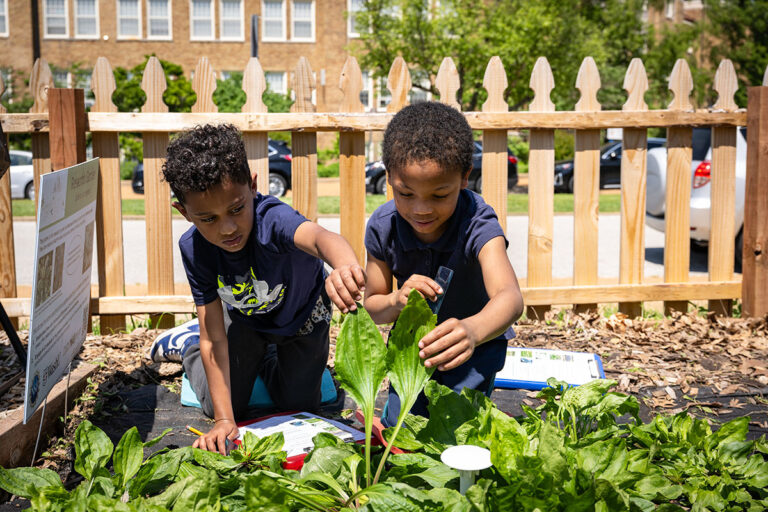
‘Plants get sick!’: WashU scientists, U. City students research plants together
Rachel Penczykowski — or Dr. Rachel, as she is known by these first graders — is an associate professor of biology in WashU Arts & Sciences and an expert on infectious disease in plants.

From Classroom to Community: CAPS GIS Students Map Safer Streets
As city leaders invest millions of dollars in traffic safety improvements, WashU Continuing & Professional Studies (CAPS) Geographic Information Systems (GIS) students Dash Martin and Margaret Mulligan wanted to understand a simple question: What impact are those changes actually making on the ground?
For more information about our community-engaged education, teaching, and learning support, please email David Pole, PhD, our Community-Engaged Education Manager: