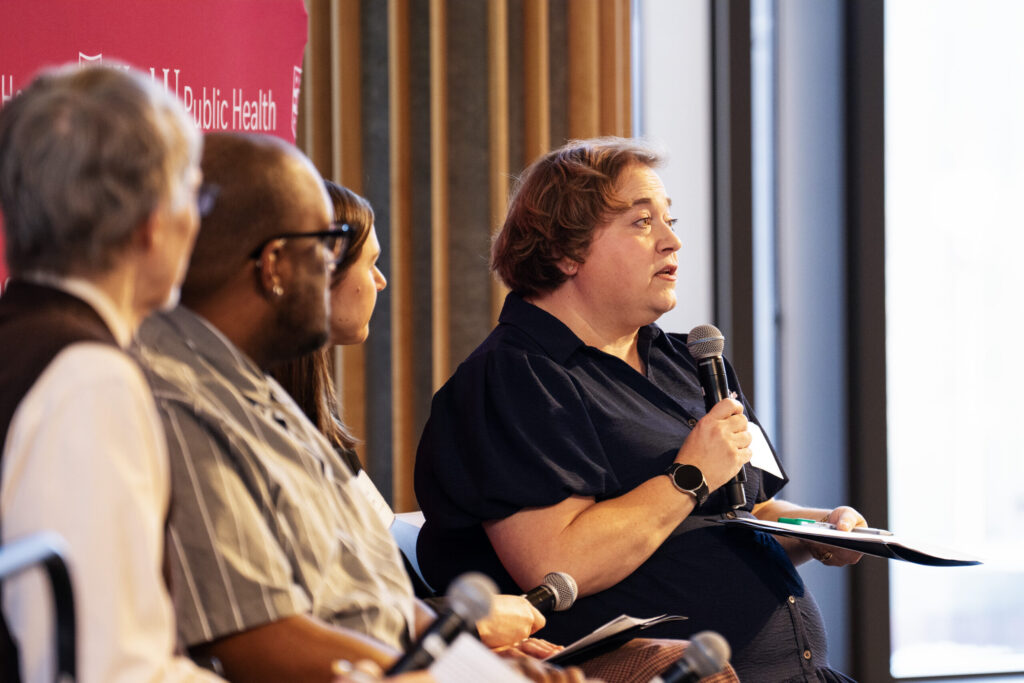
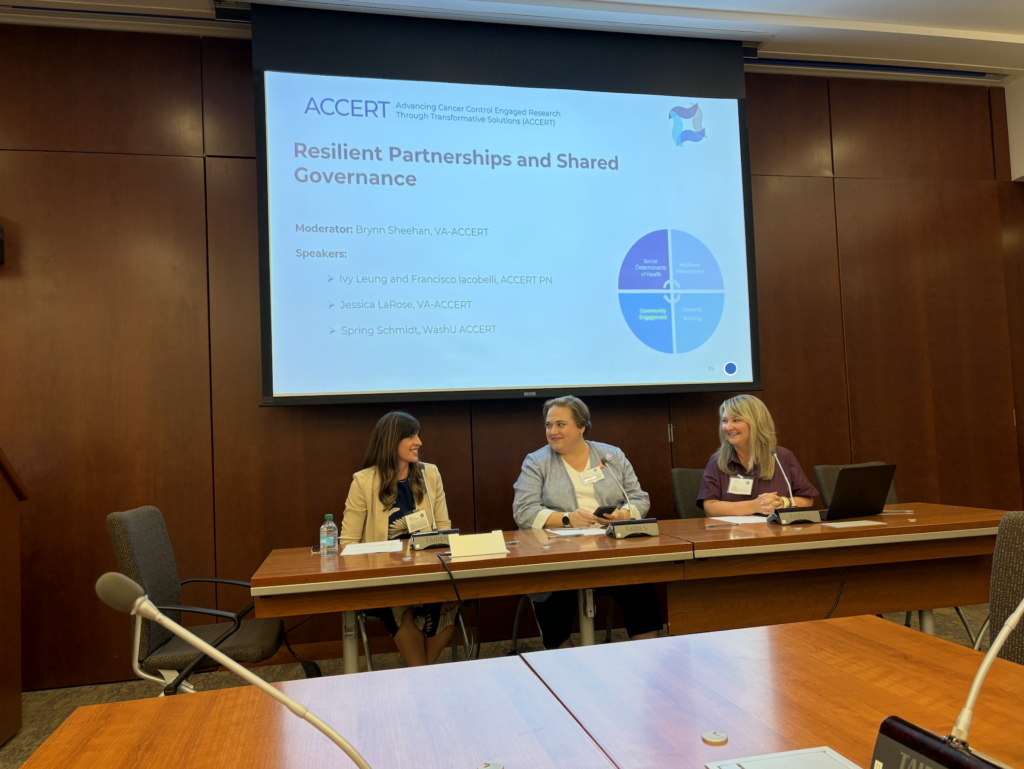
Spring Schmidt, a member of the Community Collaborative, is CEO and President of the Missouri Public Health Institute, a statewide nonprofit that supports Missouri’s 115 local public health agencies. The Confluence Collaborative talked with her about her journey to this work, the significance of public health, and the role community voice plays in MPHI’s mission.
This interview has been edited for length and clarity.
Can you start by telling us about your background and what brought you to the work you’re doing today?
I’ve been a public health professional for about 20 years, mostly in governmental public health. My longest stint before this was at the St. Louis County Department of Public Health, where I focused on community engagement, health promotion, research, and strategic and community planning. Long story short, I ended up as interim director of the health department, as well as deputy director, including the first two years of COVID.
I have a particular love for governmental public health — what it does, what it can do, what it ought to do. That’s what brought me to what was originally the Missouri Center for Public Health Excellence, a small membership association focused on how we actually lift up this system: get it more connected, more support, more resources, more training, help develop narratives that matter, and try to fix some of the deep systemic issues that are present. As part of that, we decided strategically to become a public health institute — there’s a national network of them, and we’re Missouri’s representative in it.
We work with our governmental partners to encourage them to do better, provide resources, connect them to systems they aren’t connected to, amplify what they do particularly well, and help change what doesn’t work.
What does community-engaged public health work look like in practice?
It shows up in big and small ways. Siteman Cancer Center is a good example. I’m the only community member on their senior leadership committee, but I’m a voting member. I get to listen. When I hear about their efforts to increase outreach into the Bootheel, I can say, I know some people, let’s make some calls. And because of the community connectivity I have, I’m bringing a lot of those voices with me. I’m asking people, what are y’all hearing? Is that relevant for you? Okay, good, because I’m going to say that in the next meeting.
From a research standpoint, we should be talking to community about what needs to be researched and asking them how to shape the projects. I will put a community voice process into anything I can manage to.
Can you give an example of a project where community voices changed the direction of MPHI’s work?
We haven’t gotten this one funded yet, but it has to do with data disaggregation, and it came from two different community voices.
One was the data staff at health departments, who told us they don’t get access to enough data to appropriately disaggregate it for their communities. There aren’t enough data points to say this is how many people have this form of cardiovascular disease and are also a minority population and are also women. And we’d been hearing in rural communities that they don’t have access to any of that data at all. In community meetings we held for community health assessment work, people said: ‘we don’t know how many people in our community have diabetes, because it just says rural Missouri has diabetes.’
There’s a problem at the community level, where people don’t feel represented in the numbers, and a problem among the data folks, where the number can’t be calculated because it’s too small. We started by writing a white paper on the methodological and ethical problems and what it means to be represented in data. Then we convened rural community partners from across the state for three or four listening sessions.
The research project came out of those conversations. It hasn’t been funded yet, but in the meantime we’ve started trainings that bring health department staff and community members together around the data that is available in your community, and how you use it to represent yourself to elected leaders and to the media. It was an entirely community-defined problem, and both of the communities we support said the same thing: no one represents rural data well.
What is some of the recent and upcoming work you’re most excited to be engaging in?
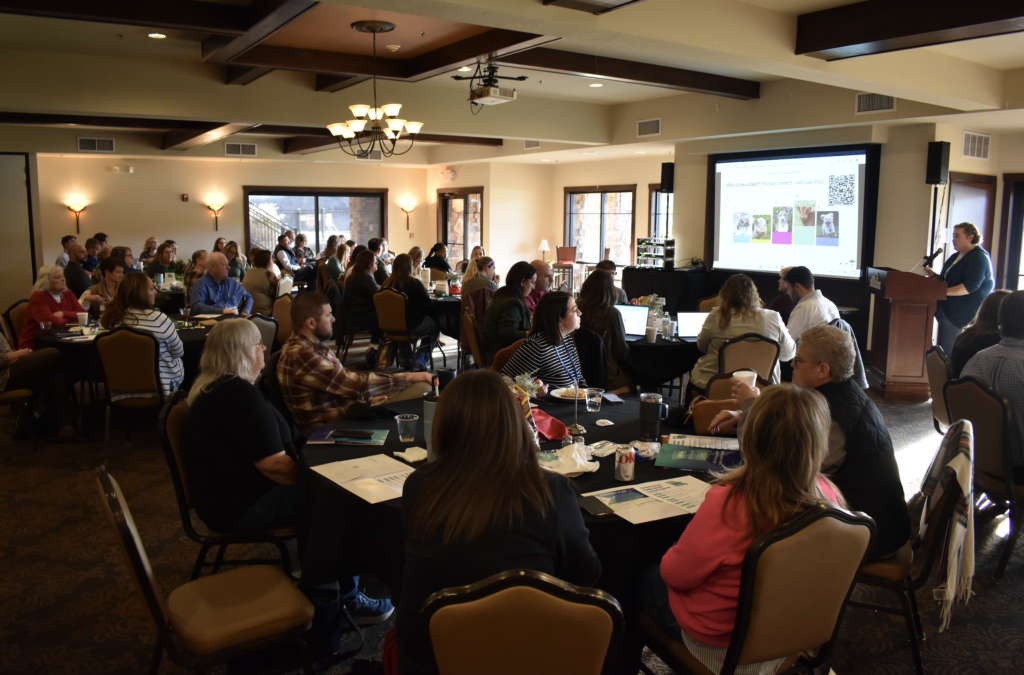
One piece we’re particularly proud of — and it’s a weird KPI — is that 97 percent of all the local public health agencies in Missouri engaged in something we put on this year. There are 115 of them in 115 different locations, and they’re notoriously difficult to corral. They don’t show up everywhere for anyone. I would do a lot to reach them, to listen to them, to get them connected to other things.
We’ve also been focused on expanding our policy influence. Four years in a row, there have been state legislative cuts to public health and especially to local public health agencies. And four years in a row, we’ve worked through as much education as possible to get most of that money restored. It’s a defensive win. But we were successful in helping our state legislative partners understand what that money is for. We’re a really new organization, but we’ve gotten two statewide policies passed. We’re not the organization that’s wild and out on a lot of different topics. We are just trying to solve problems.
How can people who aren’t in public health get involved in this work?
Reach out to us — we have a contact page on our website, and we’d be more than happy to talk about what you’re interested in. And check out your local health department. Everyone has one; you are in some health department’s jurisdiction. Learn more about the services they provide, whether they have volunteer opportunities, whether they’re engaged in something you’re passionate about.
It’s a complicated industry. The more we know about it, the more we can talk about what’s good and bad and have opportunities to affect change.
Learn more at https://mophi.org