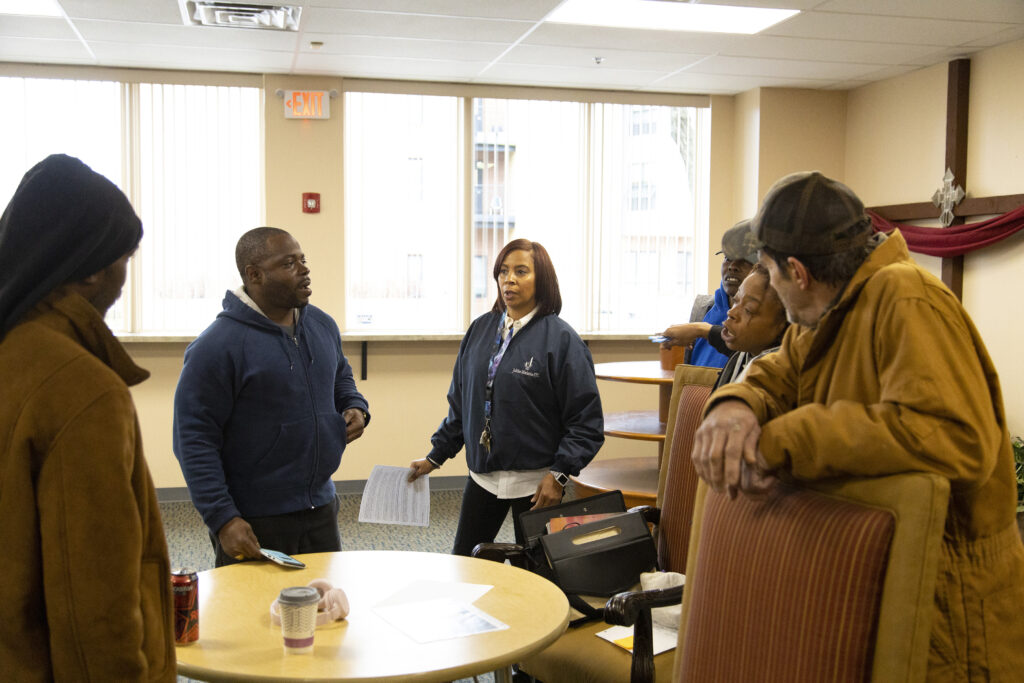
Dr. Leslie Johnson Moore serves as the First Lady of Jubilee Community Church in St. Louis. Dr. Johnson Moore spoke with the Confluence Collaborative about the Church’s substance use recovery ministry that has grown into a network of homes, mentorship, and wraparound care for men rebuilding their lives after addiction and homelessness. Dr. Johnson Moore also spoke about her partnership with WashU’s psychiatry team on a substance use recovery app for the men in recovery.
This conversation has been edited for length and clarity.
Can you talk about your own background and what brought you to Jubilee Community Church?
I grew up in the Church. My father is a pastor in Washington Park, Illinois, and my grandmother was a youth pastor, so being in ministry and helping people has just been my family’s thing. I followed in everyone’s footsteps—not intentionally, but it has a way of grabbing you.
I came to Jubilee about six years ago. I grew up in Du Quoin, Illinois, and I was raised a little sheltered, a little country. I hadn’t been introduced to drug addiction and mental illness the way I saw it in North St. Louis. I didn’t even know I had it in me to do this work, but I knew people were suffering, and I wanted to know how I could help. I was working full-time then, but the Church needed help in the office, and that grew into so many other things.
How did you begin working on the Church’s recovery program?
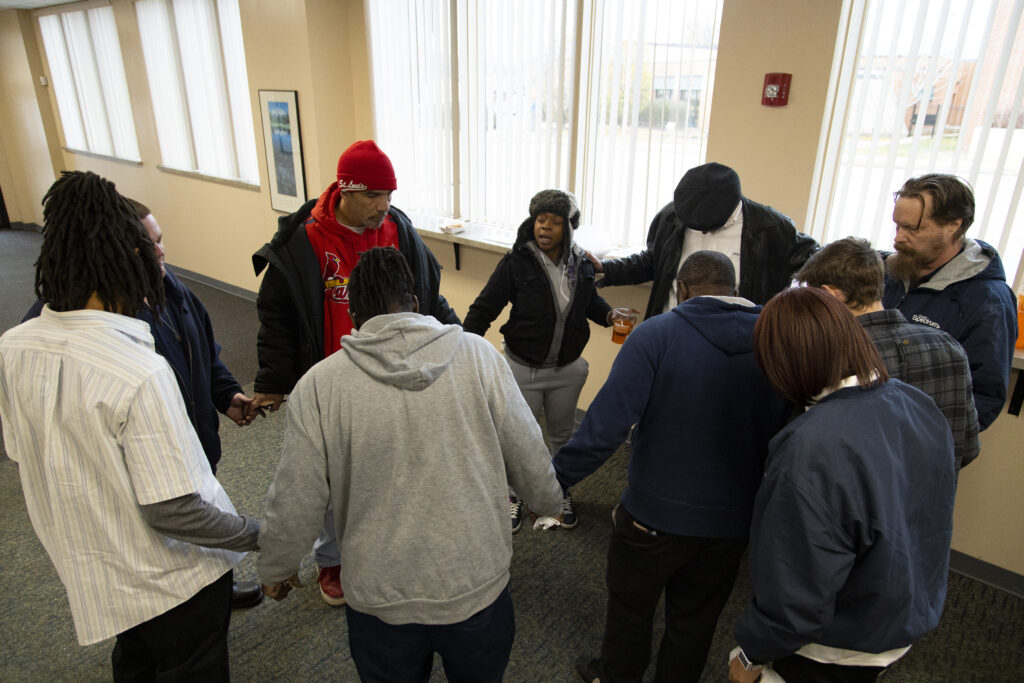
When I got there, the homes weren’t operating, so I was part of the process to get them running again. We became RSS certified through the Missouri Department of Mental Health, and we got the homes certified through MCRSP (Missouri Coalition of Recovery Support Providers). You could clearly see the area needed it desperately. The Church is on North Grand, and probably 90-95% of the people who walk by our ministry are dealing with mental illness, addiction, and/or homelessness. You can’t miss it—they’re walking the streets in anguish.
At that time, it seemed like men had it hardest finding a place to live. So, once we were certified, we got on the state’s list, and when men come out of detox looking for somewhere to stay, they can find us in the database. They can see we’re a faith-based recovery program, and the ones interested, call us and go through an interview with one of our pastors, Pastor James Boshears.
Once someone is in, what does the path forward look like?
It’s a stair-stepping process. We have two recovery homes. The first is the base—a little less private, bigger rooms with more beds. Men start there, get acclimated, and give themselves time to get their minds together. After about three months, if they’ve got a job and they’re showing progress, they move to our Turner house, which is only two to three men per bedroom—a little more privacy, a little more responsibility. Then there’s a third step: individual rooms with their own doors, their own locks, their own keys. After nine to twelve months, sometimes longer, they can get to their own space, pay rent, and have more freedom while still living among others.
This is all my husband’s vision, Dr. Bryan Moore—he’s the senior pastor. He takes into consideration the biological, the psychological, and then the theological—kind of like the needs in Maslow’s pyramid. That’s usually the process that takes a man from surviving to thriving.
Can you dig into the theological piece—what it looks like, and why it matters alongside the biological and psychological?
Everyone needs some higher power to believe in, and that’s different for different people. But being able to know there’s something bigger and greater than you at work, something you can connect to, and that from that connection there can be healing—that’s important. There’s research showing spirituality helps people in recovery grow quicker, grow back into relationship with their families and friends. Even the twelve steps have some sort of spirituality in them.
Psychologically, they get the help they need—what has the past done to you, how has it affected you? That’s important. But then where do you go from there? What do you trust in? How do you keep moving forward? Theologically, that’s where they learn how to keep moving forward with God and each other.
Do you see more resilience in recovery when it’s faith-based?
When you’re in a faith-based program, you’re not just relying on your own strength. When people rely only on their own strength, they sometimes fall, because they believe they’re weak. But when you’re constantly telling someone God is with you—you and God are co-creators of your life, you do your part and God will do God’s part—you bring them to the reality of, ‘I don’t have to do this by myself.’ That builds resilience, because you don’t feel so alone.
And we’re surrounding them with people who love on them in a godly way. Who don’t treat them like they’re the scum of the earth. You get them out of thinking they’re defined by their failures, and you build them up to know: I love you because God made you. They get to see themselves differently, because the reflection being given back to them is someone who loves God and loves them.
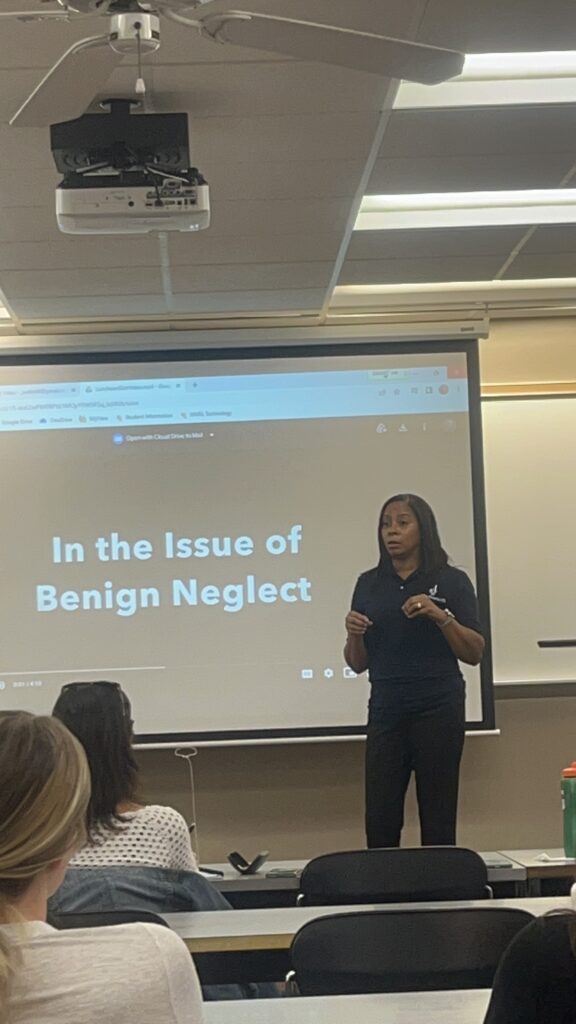
Pivoting a bit — a team at WashU has worked on developing an app, U-MATR, for people with substance use disorders. How do you use the app in your recovery programs, and what has your partnership with WashU entailed?
That app has been great. It has so many resources, and it’s an added benefit to the psychological part of their growth—knowing they have someone there to talk to, that they can check in, that they can learn where they are in their recovery. We’re so happy to be in relationship with Dr. Hannah Szlyk and her group in psychiatry. That was a part we needed to beef up in our structure, because you can’t move forward unless you have resources to help you move forward.
I’m actually one of the consultants on the app, so they get feedback from us. The WashU team puts together the content—the PowerPoints, the information—and we review it and give feedback. And I don’t just give my opinion; I ask the guys, what helps you? What do you need more of? What gives you hope? Then I bring that back, and we’ve had several meetings where the men share their input directly too.
What does someone find when they open the app?
Resources for substance use recovery—how do you find a doctor, how do you get insurance? When men come into recovery, they’ve lost everything. They’ve been surviving on the street, so what are the things they need to be thinking about? That’s all in there. And if they’re feeling sad, or having any kind of suicidal thoughts, they can connect with someone through the app who can talk them through it or see if they need a higher level of care. That’s a game changer—I love that part. The app also gives me ideas for the groups I run as a recovery support specialist.
If someone reading this wants to get involved with the Church’s recovery mission, how can they engage?
Come to a second Tuesday of the month luncheon. We feed you, and you get to really see what’s going on at Jubilee, because there’s so much. Call the ministry, ask questions, or bring a group and take a tour. Once people see what’s going on, they usually find the place where they think, “I could do this to help” — because they know their expertise better than we do. We just want people to come, ask the questions, and see where they fit in, because we want the partnerships.
Jubilee Community Church is located at 4231 North Grand Boulevard, St. Louis, MO 63107. To learn more or get involved, call 314-553-9499.