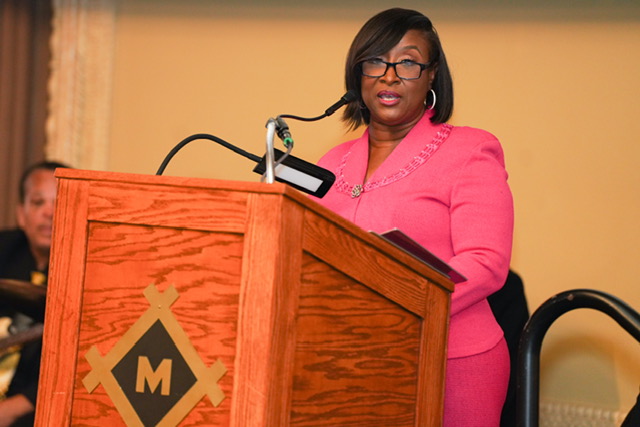
For 40 years, the Haven of Grace has sheltered unhoused pregnant women and their young children in St. Louis. What sets it apart isn’t only that it offers a safe place to give birth — it’s that it supports families for years afterward, through transitional housing, career-readiness programming, and youth development designed to break cycles of generational poverty. We spoke with Patricia Bosman, the non profit’s President and CEO, about Haven of Grace’s longitudinal support of women and families and what drew her to lead it.
For readers who aren’t familiar with the Haven of Grace, can you give an overview of the organization’s programming?
The Haven of Grace is a shelter for unhoused pregnant women and their newborns and children. We provide a three-tier program.
The Maternity Center provides housing for up to a year and a day for expecting mothers and their children, along with wraparound services, life skills, and access to good medical care. The maternal and infant mortality rate is very high in Missouri, and it doubles for Black women, so we have intensive programming to ensure women are receiving the medical care they need.
The next step is our transitional housing, located on our campus. Women may live there for up to two years with highly subsidized rent. They must work, go to school, or do both. That step is designed to get them ready to go back into the community at large.
Our final phase is Project Inspire, which has several programmatic thrusts. For moms, our signature program is Divine Daughters at the Haven of Grace. This program helps participants build career readiness and understand the real-life systems that affect stability and opportunity, from deciding whether to rent or buy a home to learning the difference between budgeting and building wealth.
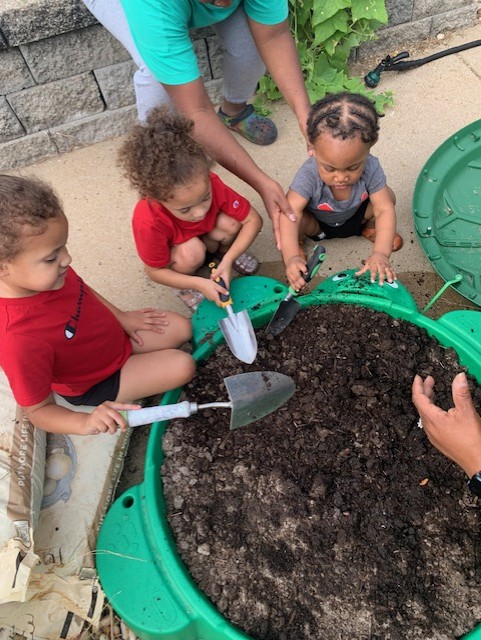
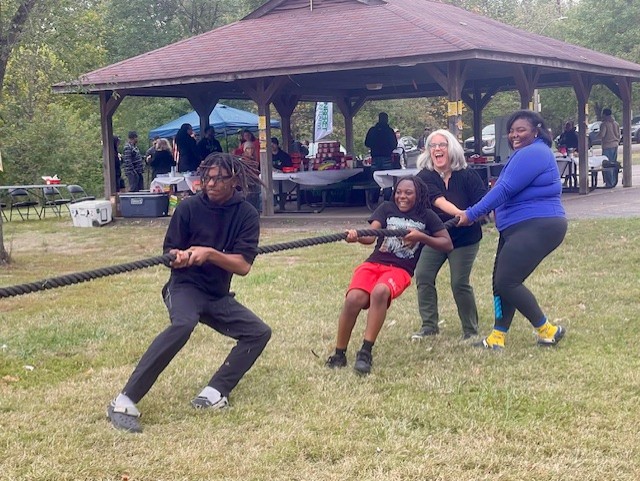
For kids, we have the Green Beret Youth Initiative for ages 8 to 14, taught by real military personnel, both retired and active. And we offer STEAM-Dream-Succeed for ages 4 to 8, which exposes children to STEAM careers. Many of the children and youth connected to our work have had limited exposure to the wide range of career pathways available to them. Our STEAM program helps expand what they can see, imagine, and pursue — supporting our broader goal of reducing generational poverty through early exposure, confidence-building, and opportunity.
And then we have our Babies/Books/Bonding program, where we read to the children. We know that children in shelter environments are typically behind in school, and we want to do everything we can to bridge that gap.
Most shelters work on much shorter timelines. Why is Haven of Grace’s long arc of support — years, not months — so essential to what your organization does?
A year and a day is simply not enough time to support a mom with children. Sometimes she brings two children under the age of five with her. She is not positioned to stand on her feet to care for her family independently.
The two years of transitional housing are designed so she doesn’t have to worry about a roof over her head or childcare — so she can focus on her individual development plan for her family. At the end of those two years, some women have saved enough to purchase a house. Some have saved enough to buy a car, or to make a down payment on rent with a cushion. These are things people take for granted that you need to operate in the world. They can move their families into a good school district — and a good school district provides the next generation with the tools they need to survive.
Poverty doesn’t just show up. It has been there for many generations, and the cycle has to be broken by someone. By supporting two or three generations at a time, we are providing the tools, access, and environment where that can happen.
What does the funding landscape look like right now? How have federal cuts and recent events affected your work?
The Haven of Grace receives some public funding through state and city sources, and we are grateful for that support. While we have not experienced severe direct cuts to those funding streams, we are feeling the broader impact of a more strained funding environment. Individual giving has softened, community needs have increased, and many nonprofits are seeking support from the same generous donor community.
Private philanthropy remains essential to helping us sustain our work and respond well to the needs of the women, children, and families we serve.
What drew you to the Haven of Grace?
I have a personal story. I was a teen mom — 15 and pregnant. I lived a very charmed life in Richmond Heights, Missouri, where I grew up. Two-parent household. And one day, I had to tell my mom that I was pregnant. My mom was a very spiritual, religious woman, and she was devastated. My dad, who had lived in extreme poverty in Mississippi, was not as devastated. They decided together that no matter what, I was going to bring that life into the world, and they would support me.
They were my haven of grace. During that time, girls hid. They were sent away. But my parents chose not to do that. They allowed me to hold my head high, with the promise that I would complete high school and do two years of college.
So, I went back to school immediately after delivering. I graduated high school on time. I went on to college, went to work for a Fortune 50 company, was promoted several times, lived a very good life, married, had other children. And one day, I received a call that my firstborn had been murdered.
That devastated my family, devastated me, and I had to fight back. Part of what drives me is that gun violence doesn’t only happen to urban kids, to marginalized lives. It happened to me. It happened to my family. It happened because some traumatized kid decided to take my son’s life. It was a white kid who took the life of a Black kid, and there were two moms who had to embrace one another on a day in court because we both lost our sons.
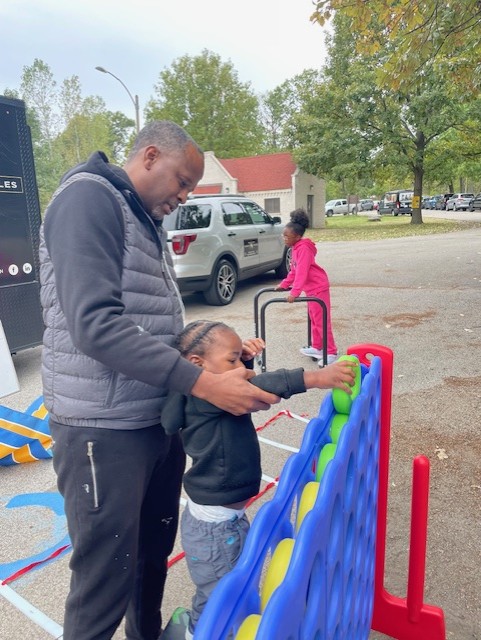
So I serve at the Haven of Grace for two reasons. One: but for the grace of God and my parents, there go I. And two: because I am in a position to impact the lives of a child such that their experience may prevent them from being so angry that they pick up a weapon and hurt someone else. That’s my story. That’s my why. That’s why I do it. And I will continue to do it until I can’t.
How can people support the Haven of Grace?
Financial contributions are always our highest priority because they allow us to respond where the need is greatest. We also welcome third-party fundraisers and are happy to provide materials that make it easier for individuals or groups to support us in that way. In addition, we occasionally need volunteers to help with campus cleanup, organizing storage areas, and other hands-on projects. And, of course, diapers and wipes are always needed and deeply appreciated.
—-
To learn more or get involved, visit thehavenofgrace.org.